Key Takeaways
- Badrinath received 428,973 pilgrims in the first month of 2026, according to the SDC Foundation (2026).
- More than 1.66 million visitors came to Badrinath during the full 2025 Char Dham Yatra season, as per tourism department data (2025).
- Mana Village, often called “the last Indian village,” offers unique cultural photography opportunities with its traditional houses and local life.
- Neelkanth Peak provides a majestic backdrop to Badrinath, ideal for capturing stunning panoramic views, especially at sunrise or sunset.
- Ethical photography practices are crucial in Badrinath, emphasizing respect for local culture and pilgrims, particularly around sacred sites.
Planning a memorable trip to the Himalayas often involves capturing its breathtaking beauty, and knowing the Best Photography Locations in Badrinath is your first step to an unforgettable visual journey. This guide delves into the most picturesque spots, offering expert tips to ensure your photographs truly reflect the spiritual grandeur and natural splendor of this sacred destination.
Quick Answer: Badrinath offers breathtaking photography opportunities in the Himalayas, including the sacred Badrinath Temple, vibrant Mana Village, majestic Neelkanth Peak, and serene Alaknanda River, perfect for capturing spiritual, cultural, and landscape beauty.
Why Badrinath is a Photographer’s Paradise
Badrinath is a photographer’s paradise due to its unique blend of majestic Himalayan landscapes, profound spiritual significance, and vibrant cultural elements. The region’s diverse scenery provides endless opportunities for stunning visual narratives, attracting both pilgrims and shutterbugs alike. Over 800,000 devotees had visited Badrinath by early June 2026, according to Amit Lohani, Deputy Director of the Tourism Department (2026), highlighting its immense draw.
The dramatic interplay of towering peaks, lush valleys, and the sacred Alaknanda River creates a canvas unlike any other. From the ethereal glow of dawn to the golden hour’s soft light, every moment offers a fresh perspective. Capturing the spiritual essence of the Char Dham Yatra through your lens adds a profound layer to your portfolio.
The sheer scale of the landscape demands attention. You’ll find yourself constantly reaching for your camera, eager to frame the next breathtaking vista. This makes it one of the prime areas for the Best Photography Locations in Badrinath.
7 Best Photography Locations in Badrinath
The Best Photography Locations in Badrinath offer a rich tapestry of natural beauty and spiritual depth, perfect for diverse photographic pursuits. From ancient temples to pristine mountain vistas, each spot tells a unique story. The full 2025 Char Dham Yatra season saw over 5.1 million pilgrims, with Badrinath recording more than 1.66 million visitors, according to tourism department data (2025), underscoring its popularity.
Here’s a curated list of seven ultimate spots that stand out for their photogenic qualities:
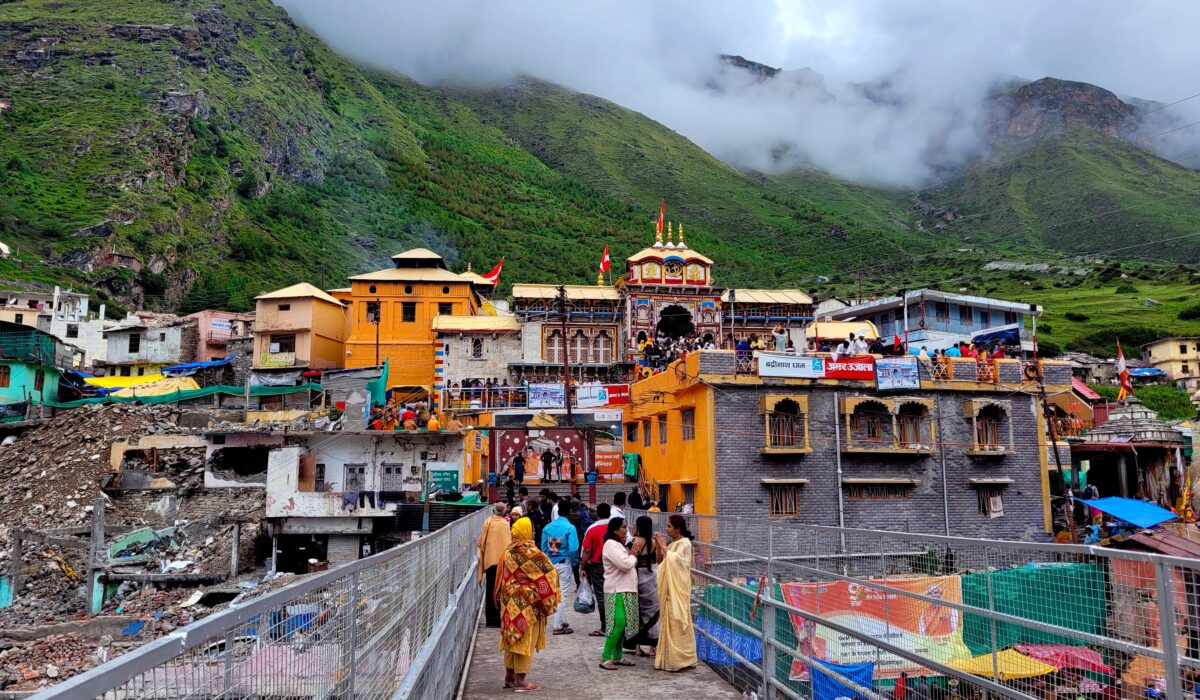
- Badrinath Temple: The iconic main temple, with its colorful facade against the backdrop of Neelkanth Peak, is a must-capture. Focus on its intricate architecture and the devotion of pilgrims.
- Mana Village: Known as “the last Indian village,” it’s rich in cultural photography opportunities, showcasing traditional Garhwali life.
- Bheem Pul: This natural stone bridge over the Saraswati River near Mana offers dramatic landscape shots and mythological intrigue.
- Neelkanth Peak: The majestic, snow-capped peak provides an unparalleled backdrop for panoramic Himalayan landscape photography.
- Alaknanda River Banks: Capture the vibrant turquoise waters as they flow through the valley, especially during sunrise or sunset.
- Vyas Gufa (Vyas Cave): A cave steeped in history, believed to be where Ved Vyas composed the Mahabharata, offering unique interior shots and cultural context.
- Charan Paduka: A sacred rock bearing the footprints of Lord Vishnu, offering serene spiritual photography amidst natural beauty.
These locations collectively represent the Best Photography Locations in Badrinath for a truly comprehensive visual experience.
Mana Village & Bheem Pul: Cultural & Natural Wonders
Mana Village, just a few kilometers from Badrinath, is a treasure trove for cultural and natural photography, offering a glimpse into Himalayan life and legend. It is often cited as “the last Indian village” before the Indo-Tibetan border, making it a unique cultural photography destination. The village’s traditional stone houses and the warm smiles of its inhabitants provide authentic subjects.
Bheem Pul, a natural stone bridge, dramatically spans the Saraswati River just outside Mana. This geological wonder is not only visually striking but also holds immense mythological significance, believed to have been built by Bheem. Capturing the roaring river beneath the bridge against the rugged mountains offers powerful landscape photography.
Exploring Mana Village allows you to immerse yourself in local culture, providing countless opportunities for candid portraits and street photography. It’s an essential stop when scouting for the Best Photography Locations in Badrinath.
From experience, the morning light in Mana is particularly magical, casting a soft glow on the ancient structures and vibrant prayer flags. This makes early visits ideal for capturing the village’s essence.
Neelkanth Peak: Capturing the Himalayan Grandeur
Neelkanth Peak, standing tall at approximately 6,597 meters, is the iconic, snow-capped sentinel overlooking Badrinath, providing unparalleled opportunities for capturing Himalayan grandeur. Its majestic presence dominates the skyline, serving as a constant, breathtaking backdrop to the Badrinath Temple and surrounding valley. The peak’s pristine beauty makes it one of the most significant of the Best Photography Locations in Badrinath.
For the most dramatic shots, position yourself to capture Neelkanth Peak during sunrise or sunset. The changing light paints the snow-clad slopes in hues of gold, pink, and purple, creating an ethereal spectacle. Wide-angle lenses are ideal for encompassing its vastness, while a telephoto lens can isolate its intricate details.
The sheer scale of Neelkanth Peak is awe-inspiring. It embodies the raw, untamed beauty of the Himalayas. This makes it a prime subject for serious landscape photographers.
Alaknanda River & Sacred Sites: Flowing Beauty
The Alaknanda River, with its distinctive turquoise waters, is a dynamic subject for photography in Badrinath, gracefully flowing through the valley and enhancing the spiritual ambiance of nearby sacred sites. Its constant movement and vibrant color provide excellent opportunities for long exposure photography, creating silky water effects against the rugged terrain. The river banks and surrounding areas are undeniably among the Best Photography Locations in Badrinath.
Numerous smaller sacred sites dot the riverbanks, offering contemplative subjects for your lens. These include Tapt Kund, a natural thermal spring, and the Brahma Kapal, a revered platform for rituals. Capturing pilgrims performing their devotions along the river adds a profound human element to your spiritual photography.
The synergy between the flowing river and the ancient rituals creates a powerful visual narrative. This blend of natural serenity and spiritual activity is what makes these spots so compelling. Consider a Spiritual Significance of Badrinath Temple guide to deepen your understanding.
Focusing on reflections in the calmer sections of the Alaknanda can also yield stunning, symmetrical compositions. The river is a living entity, constantly changing, offering new perspectives with every visit.
Best Time for Photography in Badrinath
The best time for photography in Badrinath is generally from May to June and September to October, when the weather is most favorable and the skies are often clear, offering crisp views of the Himalayas. These periods avoid the heavy monsoon rains and the harsh winter closures, ensuring accessibility to all the Best Photography Locations in Badrinath. The Char Dham Yatra recorded a 3.7% decline in pilgrim arrivals in the first month of 2026 compared to the corresponding period in 2025, as analyzed by the SDC Foundation (2026), indicating varying seasonal crowd levels.
During May and June, the weather is pleasant, and the landscape is vibrant green, perfect for capturing lush valleys and blooming flora. September and October, post-monsoon, bring incredibly clear skies and a refreshing chill, ideal for capturing the sharp details of Neelkanth Peak and the vivid colors of the Alaknanda River.
Avoid the monsoon months (July-August) due to heavy rainfall and increased risk of landslides, which can significantly hinder photography and travel. Winter (November-April) sees the region closed due to heavy snowfall. For comprehensive planning, consult a Badrinath Travel Tips Weather guide.
Essential Gear & Tips for Badrinath Photography
Having the right gear and knowing key photography tips are crucial for maximizing your potential at the Best Photography Locations in Badrinath, given the challenging Himalayan environment. A robust camera body, such as a Sony Alpha or Canon EOS, paired with versatile lenses, will serve you well. Approximately 55,000 pilgrims are currently visiting the Char Dham shrines daily as of May 2026, as reported by the SDC Foundation (2026), indicating the need for careful navigation of crowds.
Consider packing a wide-angle lens (16-35mm) for expansive landscapes and architectural shots, a telephoto lens (70-200mm or beyond) for capturing distant peaks and wildlife, and a fast prime lens (50mm f/1.8) for low-light situations inside temples or for portraits. Don’t forget extra batteries, memory cards, and a sturdy tripod for long exposures and sharp landscape shots.
Here are some essential tips for your photographic journey:
- Protect Your Gear: Dust, moisture, and extreme temperatures are common. Use weather-sealed camera bodies and lens covers.
- Golden Hour Magic: Plan your shoots around sunrise and sunset for the most dramatic light, especially for Neelkanth Peak.
- Layer Up: Dress in layers to adapt to rapidly changing mountain weather, keeping both yourself and your gear comfortable.
- Respectful Distances: When photographing pilgrims or local life, maintain a respectful distance and always ask for permission.
- Post-Processing: Embrace the unique Himalayan light in your post-processing. Enhance colors and contrasts to reflect the true grandeur.
- Altitude Sickness Awareness: Be aware of altitude sickness symptoms and acclimatize properly. Your health is paramount.
These considerations ensure you are well-prepared to capture the essence of the Best Photography Locations in Badrinath.
Ethical & Safe Photography in the Himalayas
Ethical and safe photography practices are paramount when exploring the Best Photography Locations in Badrinath, ensuring respect for local culture, pilgrims, and the fragile Himalayan environment. The Uttarakhand Tourism Department, under the leadership of Chief Minister Pushkar Singh Dhami, emphasizes responsible tourism and pilgrim safety. Anoop Nautiyal of the SDC Foundation consistently advocates for sustainable management of the Char Dham Yatra, highlighting the importance of mindful visitation.
Always seek permission before photographing individuals, especially in religious contexts. Avoid using flash inside temples and maintain a quiet, respectful demeanor. Remember that while you are there to capture beauty, many are there for spiritual solace.
Safety is also a key concern in the mountains. The terrain can be challenging, and weather can change rapidly. Amit Lohani, Deputy Director of the Tourism Department, notes that many pilgrims underestimate the physical demands of the Himalayan pilgrimage, a caution that extends to photographers carrying heavy gear. Stay on marked paths, inform someone of your itinerary, and be prepared for sudden weather shifts.
Carrying a first-aid kit, staying hydrated, and being mindful of your surroundings are non-negotiable. Your incredible shots shouldn’t come at the expense of safety or local respect. The local community’s well-being is as important as your photographic pursuits.
Frequently Asked Questions
What are the best places to visit in Badrinath?
The best places to visit in Badrinath include the sacred Badrinath Temple, the vibrant Mana Village, the majestic Neelkanth Peak, and the serene Alaknanda River. These locations offer a rich blend of spiritual and natural beauty, making them ideal for exploration and photography.
Which is the most beautiful Dham in Char Dham?
While beauty is subjective, Badrinath is often considered exceptionally beautiful due to its stunning backdrop of the Neelkanth Peak and the vibrant Alaknanda River. The full 2025 Char Dham Yatra season saw Badrinath record more than 1.66 million visitors, as per tourism department data (2025), reflecting its widespread appeal. Each Dham offers unique spiritual and scenic experiences.
Is Badrinath worth visiting?
Yes, Badrinath is absolutely worth visiting for its profound spiritual significance, breathtaking Himalayan landscapes, and unique cultural experiences. It offers a powerful journey for pilgrims and an unparalleled visual feast for photographers, making it a truly enriching destination.
What is the best time to visit Badrinath?
The best time to visit Badrinath is during the summer months of May and June, and the post-monsoon period of September and October. These seasons offer pleasant weather, clear skies, and full accessibility to all attractions, ensuring optimal conditions for photography and exploration.
What photography equipment is recommended for Badrinath?
For Badrinath, a versatile DSLR or mirrorless camera like a Sony Alpha or Canon EOS, a wide-angle lens, a telephoto lens, and a sturdy tripod are highly recommended. Don’t forget extra batteries and memory cards, as power sources can be limited in remote areas.
Embarking on a photographic journey to Badrinath promises an unparalleled experience, blending spiritual reverence with awe-inspiring natural beauty. By exploring these Best Photography Locations in Badrinath, from the sacred temple to the towering peaks, you’re set to capture images that truly tell a story. Plan your trip with Perfect Planners to ensure every moment, and every shot, is perfectly curated for a luxurious and unforgettable Himalayan adventure.
Leave a Reply
You must be logged in to post a comment.